


Build a Marketing System Instead of Running Campaigns
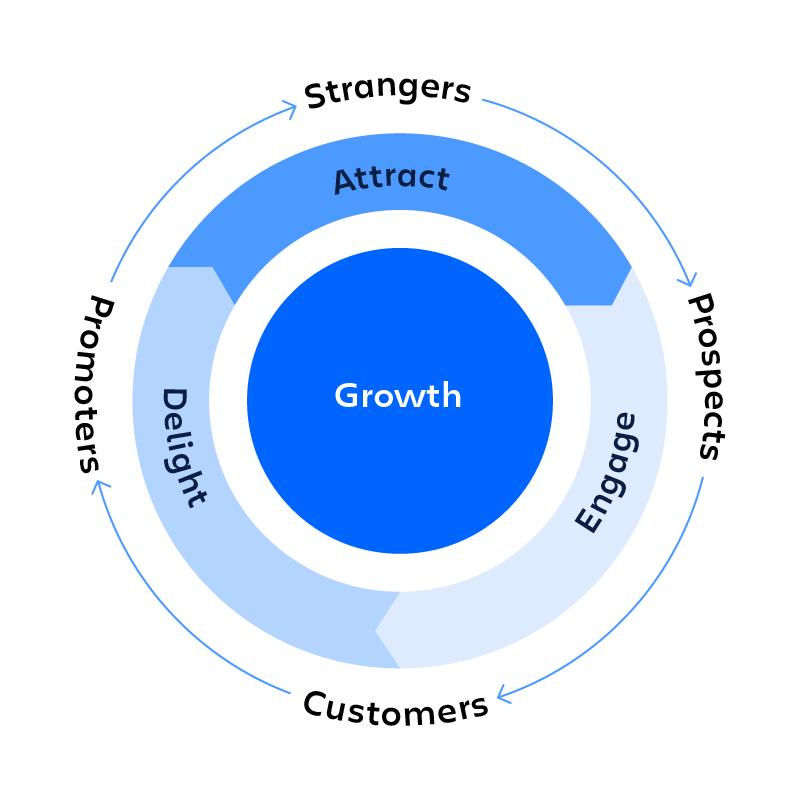
Why Consistent Growth Rarely Comes From One Great Marketing Idea
There’s a familiar rhythm inside a lot of small businesses.
Sales slow down.
Someone suggests running a campaign.
A promotion gets created. Ads go live. Emails are sent. Social posts start appearing more frequently.
For a few weeks, everyone is paying attention to marketing.
Maybe traffic will increase. A few leads come in. There’s some momentum.
Then the campaign ends.
Everyone goes back to their regular responsibilities, marketing becomes quieter, and a few months later the same conversation happens again.
"We need to do some marketing."
We’ve seen this pattern enough times to recognize that the problem usually isn’t a lack of effort.
It’s that marketing is being treated as an event instead of a system.
And those are two very different ways to grow a business.
Campaigns Aren't the Problem
There’s nothing inherently wrong with marketing campaigns.
A campaign can be extremely useful.
You might be launching a new service, promoting an event, entering a new market, filling seasonal
capacity, or trying to generate attention around a specific opportunity.
Campaigns give businesses focus.
The problem begins when campaigns become the entire marketing strategy.
One campaign ends.
Another begins.
Each has a new message, a new offer, perhaps a new audience.
But very little connects them.
The business keeps generating bursts of activity without building anything that becomes more valuable over time.
That's an important distinction.
A campaign creates activity.
A marketing system creates continuity.
What Happens to the People Who Don't Buy?
This is one of the questions we like asking when looking at a company's marketing.
Imagine a campaign generates 100 inquiries.
Ten become customers.
That's great.
But what happened to the other 90?
Some weren't ready.
Some needed more information.
Some compared alternatives.
Some got distracted.
Some intended to come back later.
And some simply never heard from the business again.
The campaign may have technically ended successfully.
But the opportunity didn't necessarily end with it.
Without a system for continuing those relationships, businesses repeatedly pay to generate attention
they've already earned once.
Then, when they need more sales, they go looking for another hundred people.
That's an expensive cycle.
Marketing Should Remember
A good marketing system has memory.
It knows where someone came from.
What they were interested in.
Whether they became a customer.
When they last heard from the business.
What should happen next.
That doesn't necessarily require complicated technology.
Sometimes it begins with a well-organized CRM and a clear follow-up process.
The important part is that the relationship doesn't disappear simply because a campaign ended.
If someone isn't ready today, the business has a thoughtful way to stay relevant tomorrow.
That's when marketing starts becoming an asset rather than a series of expenses.
The Customer Doesn't Experience Your Campaign
This is another place where businesses sometimes look at marketing differently from their customers.
Internally, we think in campaigns.
The spring promotion.
The Facebook campaign.
The new website launch.
The email campaign.
The customer doesn't see those boundaries.
They experience one business.
They may discover you through Google, visit your website two weeks later, read a review, follow you on social media, open an email three months after that, and finally call when the timing is right.
To the customer, that's one journey.
If each part of the business operates independently, that journey can feel disconnected.
The advertisement makes one promise.
The website communicates something slightly different.
The salesperson has another explanation.
Follow-up happens inconsistently.
Individually, none of these problems may seem significant.
Together, they create friction.
A marketing system connects those moments.
Marketing Is Bigger Than Lead Generation
One of the reasons businesses become overly dependent on campaigns is that marketing gets reduced to one job:
Generate leads.
But marketing has a much larger role.
It helps people discover the business.
It creates understanding.
It builds confidence.
It answers questions.
It supports sales.
It keeps existing customers connected.
It encourages referrals.
It creates reasons to return.
When marketing is viewed only as lead generation, businesses naturally spend most of their energy at the beginning of the customer journey.
More traffic.
More ads.
More leads.
Meanwhile, some of the biggest opportunities may exist further down the line.
Better follow-up.
Better communication.
Better customer education.
Better retention.
Better referrals.
That's why we tend to look at marketing as a system rather than a department.
Everything is connected.
What Does a Marketing System Actually Look Like?
It doesn't need to be complicated.
At its simplest, a marketing system answers a few important questions.
How do people discover us?
Search, referrals, social media, advertising, partnerships, events, community visibility, or some combination of them.
What happens when they find us?
Does the website clearly explain what you do? Is the next step obvious? Is there enough information to create confidence?
What happens when they raise their hand?
Who responds? How quickly? Where is that inquiry recorded? What happens if they don't respond immediately?
What happens after the sale?
Do customers hear from you again? Are they encouraged to return, leave a review, refer someone, or explore another service?
How do we know what's working?
Can you see where customers came from and where opportunities are being lost?
Those questions are far more useful than simply asking:
"What campaign should we run next?"
The System Should Connect Marketing, Sales and Operations
This is where marketing becomes a leadership conversation.
Suppose marketing generates qualified inquiries, but it takes two days for someone to respond.
That's not necessarily a marketing problem.
But it affects marketing performance.
Suppose your website promises a simple process, but the actual buying experience is complicated.
Again, that's not strictly a marketing issue.
But customers experience it as one.
Or suppose the sales team repeatedly hears the same questions from prospects, yet those questions are never addressed on the website or in marketing content.
That's a missed opportunity for the entire organization.
Marketing, sales, operations, and customer experience shouldn't operate as separate islands.
Each one produces information that can make the others better.
A strong marketing system creates those feedback loops.
The Best Systems Learn
This may be the biggest difference between running campaigns and building a system.
Campaigns finish.
Systems learn.
Every inquiry tells you something.
Every sales conversation tells you something.
Every lost opportunity tells you something.
Every review tells you something.
Every customer question tells you something.
Over time, patterns begin to appear.
Maybe prospects consistently misunderstand your pricing.
Maybe one service attracts significantly better customers.
Maybe referrals convert differently from paid traffic.
Maybe people visit a certain page repeatedly before contacting you.
Maybe customers keep asking a question your website never answers.
That information should influence what happens next.
Your messaging improves.
Your website improves.
Your sales conversations improve.
Your follow-up improves.
Your next campaign improves.
The system gets smarter because the business is paying attention.
Campaign Thinking vs. System Thinking
The difference can be surprisingly simple.
Campaign thinking asks:
"How do we generate leads this month?"
System thinking asks:
"How do people become customers here?"
Campaign thinking asks:
"How many clicks did we get?"
System thinking asks:
"What happened after the click?"
Campaign thinking asks:
"What's our next promotion?"
System thinking asks:
"What have we learned from the last six months?"
Campaign thinking focuses on activity.
System thinking focuses on movement.
Where people enter.
Where they hesitate.
Where they leave.
And what helps them move forward.
Both approaches can use the same tools.
The difference is how those tools are connected.
You Can Still Run Campaigns
Building a marketing system doesn't mean abandoning campaigns.
Quite the opposite.
Campaigns become more valuable when there's a system behind them.
Imagine running a campaign when:
Your messaging is already clear.
Your website converts effectively.
Your CRM captures every inquiry.
Your sales team responds quickly.
Follow-up happens consistently.
Past prospects continue hearing from you.
Customer feedback feeds back into marketing.
Now additional traffic isn't being poured into a disconnected process.
It's entering an infrastructure designed to make something of that attention.
That's when increasing your marketing investment starts to make more sense.
Start by Mapping What Already Happens
Businesses sometimes assume building a marketing system means buying new software or implementing complicated automation.
That's rarely where we'd start.
Start with a whiteboard.
Map what actually happens when someone discovers your business.
How did they find you?
Where do they go?
What do they see?
What action do they take?
Who receives that information?
What happens next?
And then what?
Keep following the journey until they either become a customer or disappear.
You'll probably find gaps.
That's useful.
Those gaps are often where the biggest growth opportunities are hiding.
You may discover that you don't need another campaign yet.
You need a better response process.
Or clearer messaging.
Or stronger follow-up.
Or better visibility into what's already happening.
Final Thoughts
Marketing campaigns can create momentum.
But momentum isn't the same as growth.
Growth becomes more sustainable when each marketing effort contributes to something larger.
When the website supports sales.
When sales conversations improve marketing.
When customer feedback improves messaging.
When leads aren't forgotten.
When previous campaigns make future campaigns smarter.
When the business understands the entire journey rather than only the first click.
That's when marketing stops feeling like something you periodically turn on and off.
It becomes part of how the business operates.
So before asking what campaign you should run next, it may be worth asking a different question:
What are we building that will still be working after the campaign ends?
That's the beginning of a marketing system.
Request a Discovery Call
If your marketing feels like a series of disconnected campaigns, the first step may not be launching another one.
A discovery call can help us look at how people currently discover your business, what happens after they show interest, and where marketing, sales, and customer experience may be disconnected.
From there, we can identify opportunities to build a marketing system that becomes more useful and more valuable over time.
Comments